
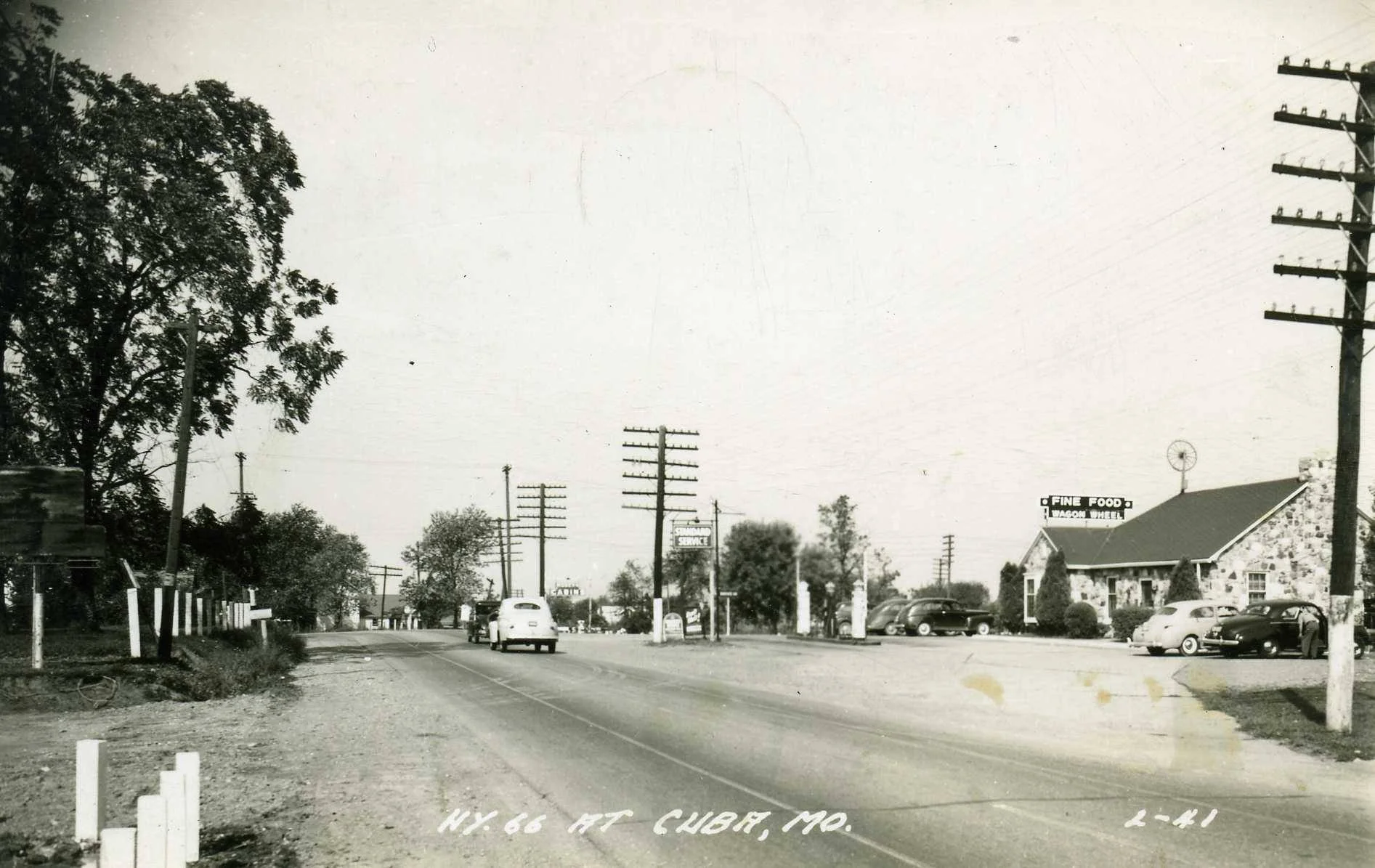
Wagon Wheel Motel History
The Wagon Wheel Motel in Cuba, Missouri, is one of Route 66’s most enduring historic motor courts. Its surviving stone buildings, neon sign, and generations of travelers connect today’s guests with the early years of automobile tourism.
History of the Wagon Wheel Motel
The property developed through several important periods:
• The Beginnings (1934–1938): Robert W. and Margaret Martin acquired the land in 1934. The Wagon Wheel restaurant and filling station opened in March 1936 under Joe and Clara Slowensky. Lodging at the property is first documented in 1938. Master stonemason Leo Friesenhan constructed the distinctive stone buildings in a Tudor Revival style.
• The Mathis Era (1947): John and Winifred Mathis acquired the tourist cabins, while William and Sadie Mae Pratt took over the café. John Mathis designed the iconic Wagon Wheel neon sign at his kitchen table in 1947, helping mark the transition from “cabins” to “motel.”
• Roberts–Armstrong Stewardship (1963–2009): Pauline Roberts, later Pauline Armstrong, became the motel’s longtime proprietor in 1963. During this era, the property remained an important Route 66 landmark. The Wagon Wheel Motel, Café and Station was listed in the National Register of Historic Places on April 7, 2003.
The Connie Echols Era (2009–2026)
Connie Echols purchased the Wagon Wheel in 2009 and undertook an extensive, multi-year restoration that renewed the motel’s infrastructure, roofs, and interiors while preserving its historic character.
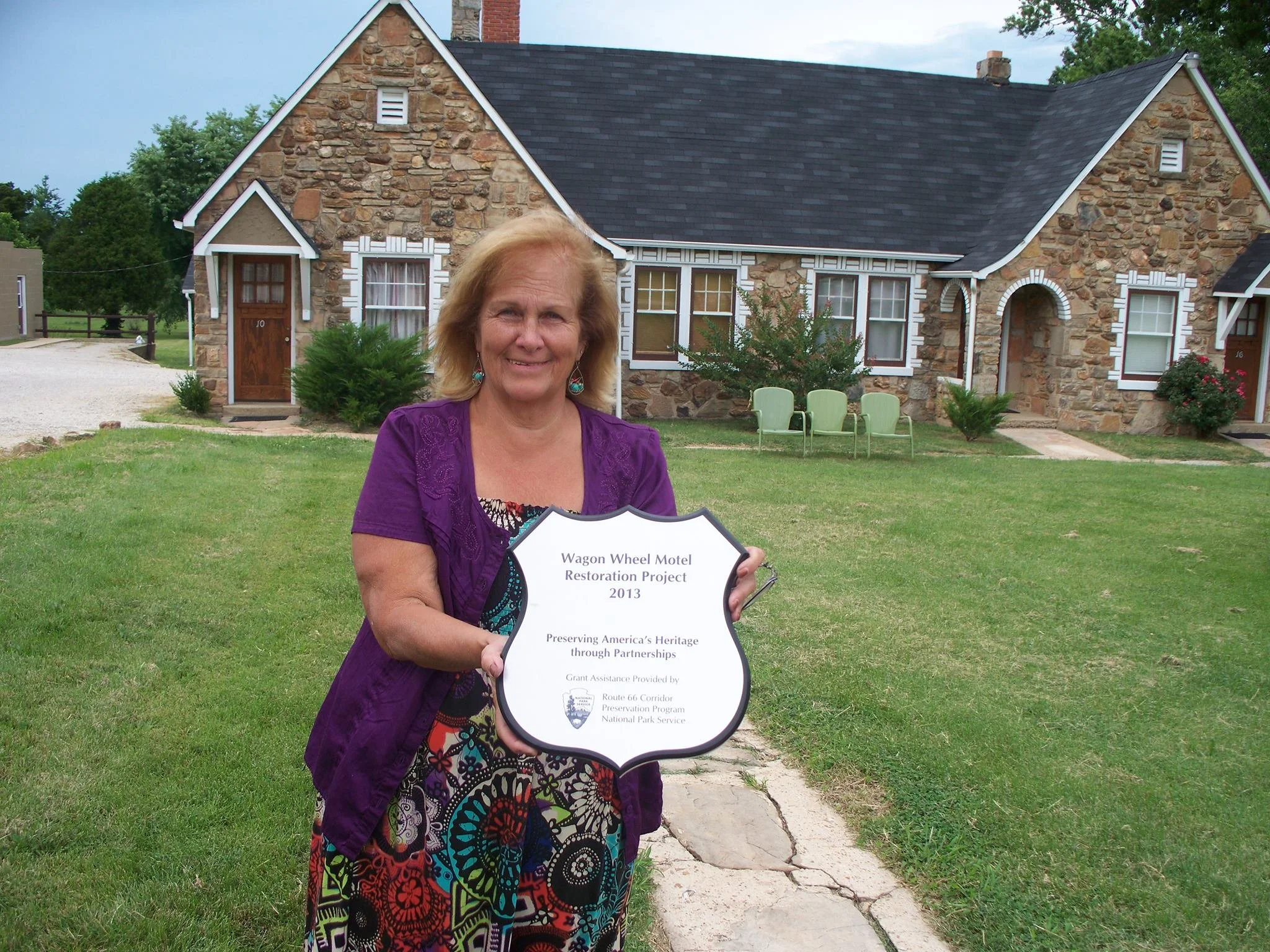
• Preservation Work: Federal preservation funding supported a $30,000 motel-unit restoration project in 2010 and a separate $17,500 roof project in 2011, accompanied by matching support.
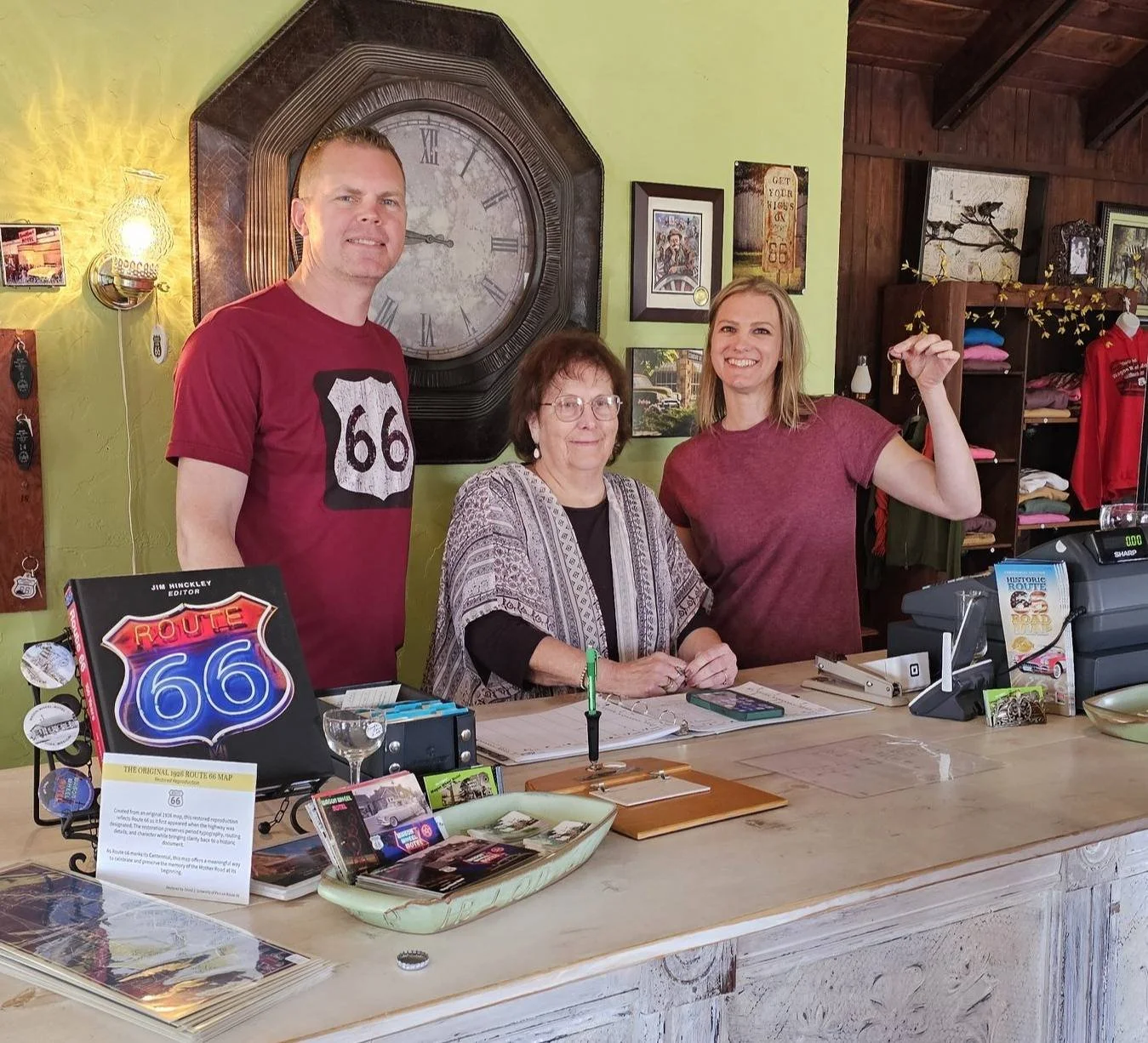
• Connie’s Shoppe: The former restaurant building became Connie’s Shoppe, serving as the motel office and a retail space for Route 66 memorabilia and local gifts.
• A Living Landmark: Connie welcomed travelers from around the world and helped carry the Wagon Wheel into a new generation of Route 66 tourism.
• Transition: Rich and Christina Dinkela acquired the Wagon Wheel Motel on April 8, 2026, beginning the property’s next chapter.
Present Day — Dinkela Stewardship (2026–Present)
Rich and Christina Dinkela are committed to honoring Connie Echols and the generations of owners who protected the Wagon Wheel before them. Their work focuses on preserving the historic character of the property, improving the guest experience, and keeping this authentic Route 66 landmark ready for the road travelers who will write its next stories.
We hope you will visit, stay, and become part of the Wagon Wheel’s continuing history.
Historic Route 66 · Cuba, Missouri
History of the Wagon Wheel Motel
The Wagon Wheel is one of Route 66’s earliest and longest-operating historic motor courts—an Ozark sandstone landmark where travelers can still spend the night beside the Mother Road.
Mid-1930s Origins
Food, fuel and lodging for the new automobile age
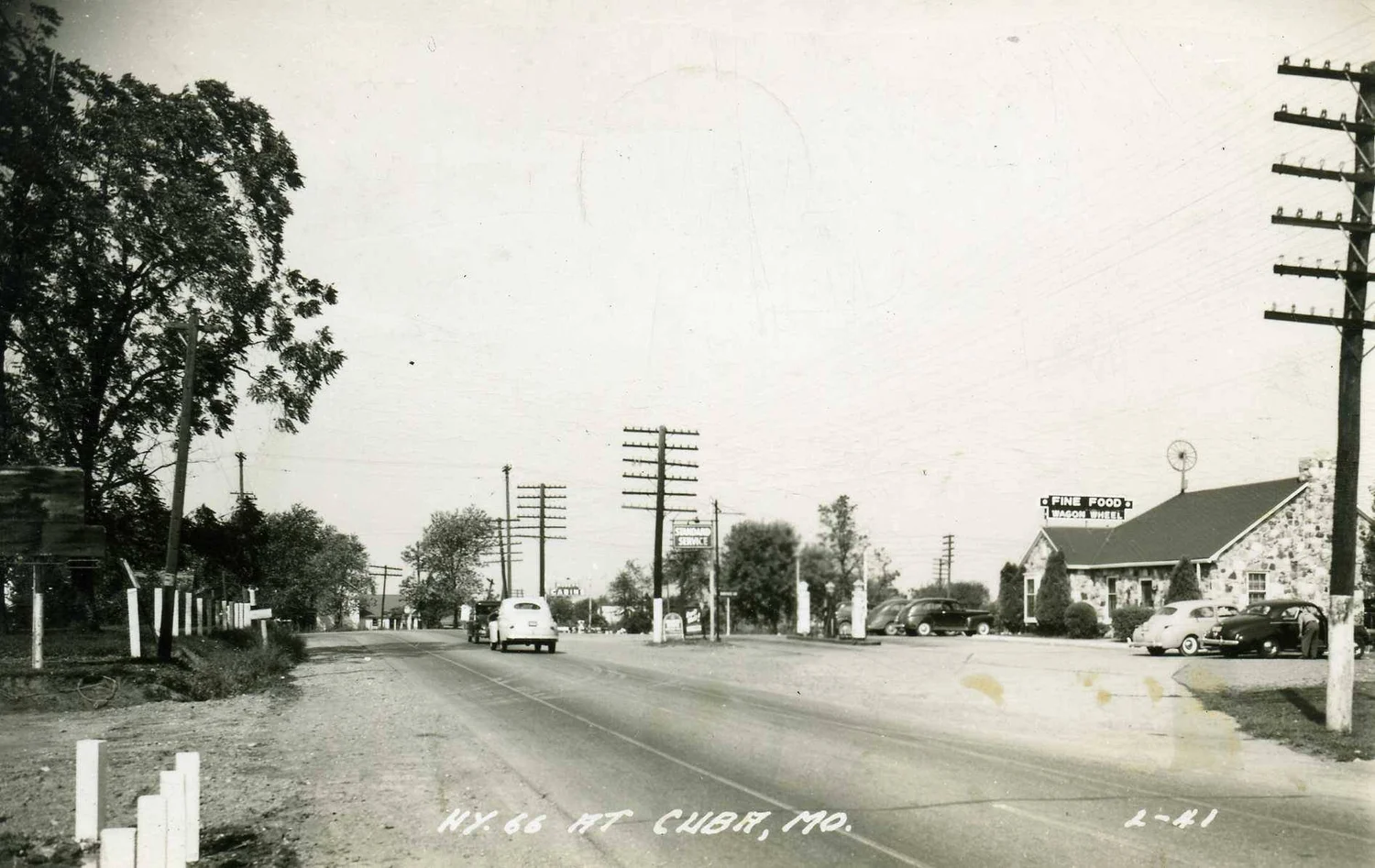
The Wagon Wheel story began in the mid-1930s as Route 66 brought a growing stream of motorists through Cuba. Owner history dates the café to 1935 and the motel to 1936. The National Register record documents the Wagon Wheel Café and Gas Station opening in 1936 and the Wagon Wheel Cabins accommodating overnight travelers by 1938.
Robert W. and Margaret Martin had acquired the property in 1934. From the beginning, the roadside business combined the services travelers needed: a café, fuel and a place to sleep.
Built to Endure
Ozark sandstone and an uncommon motor-court plan
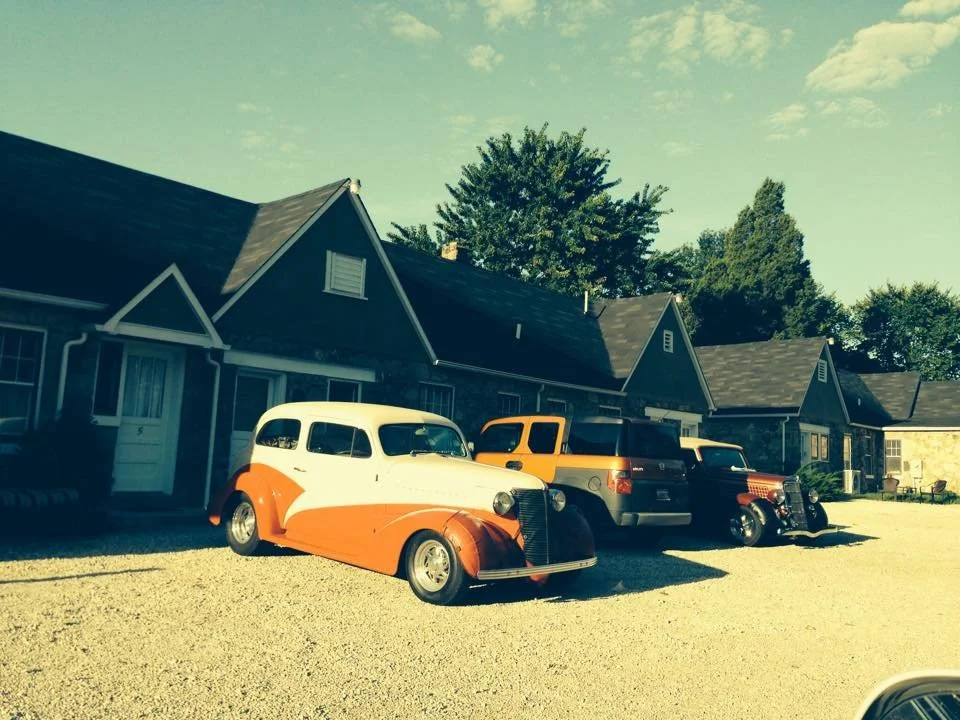
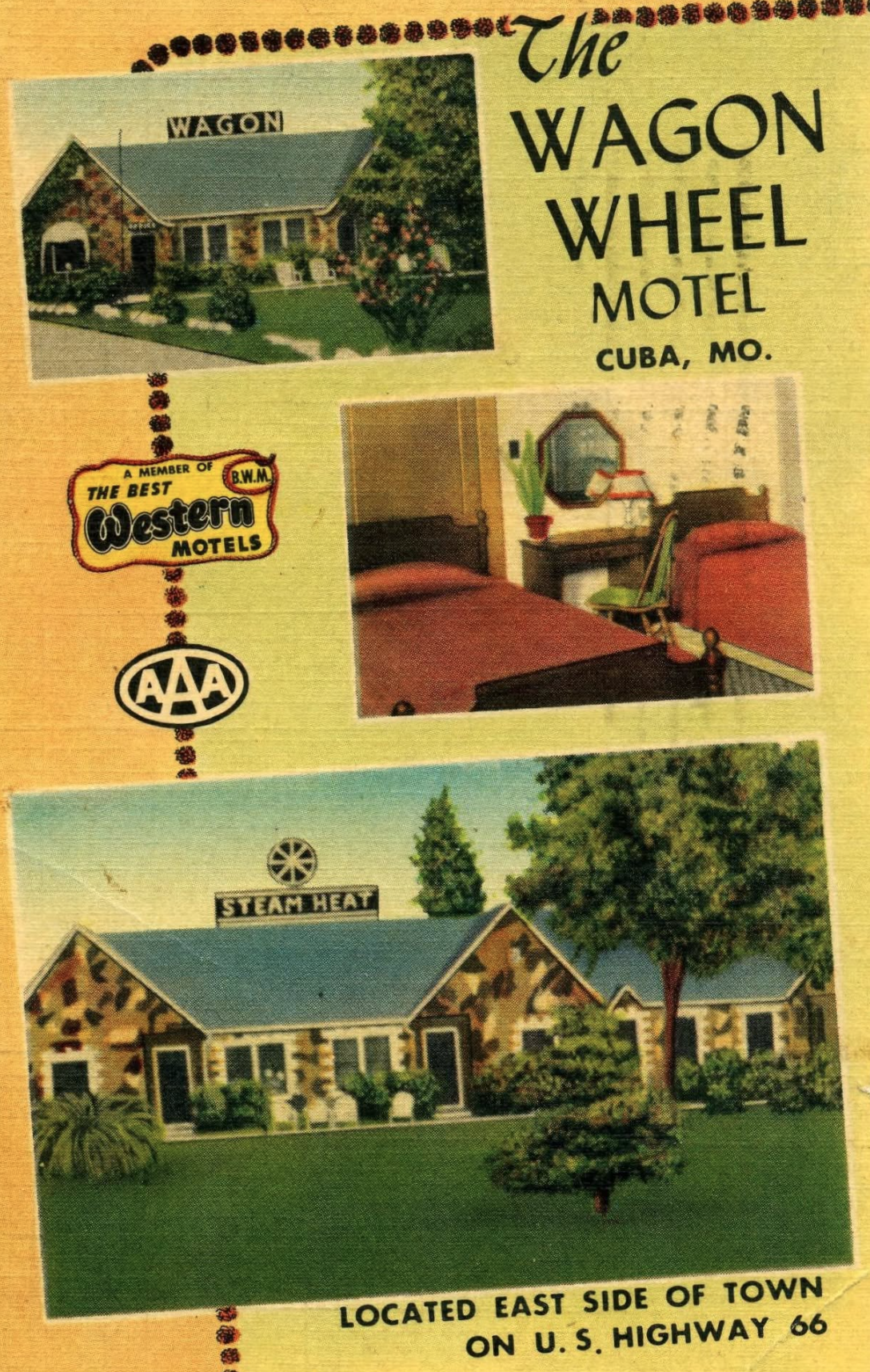
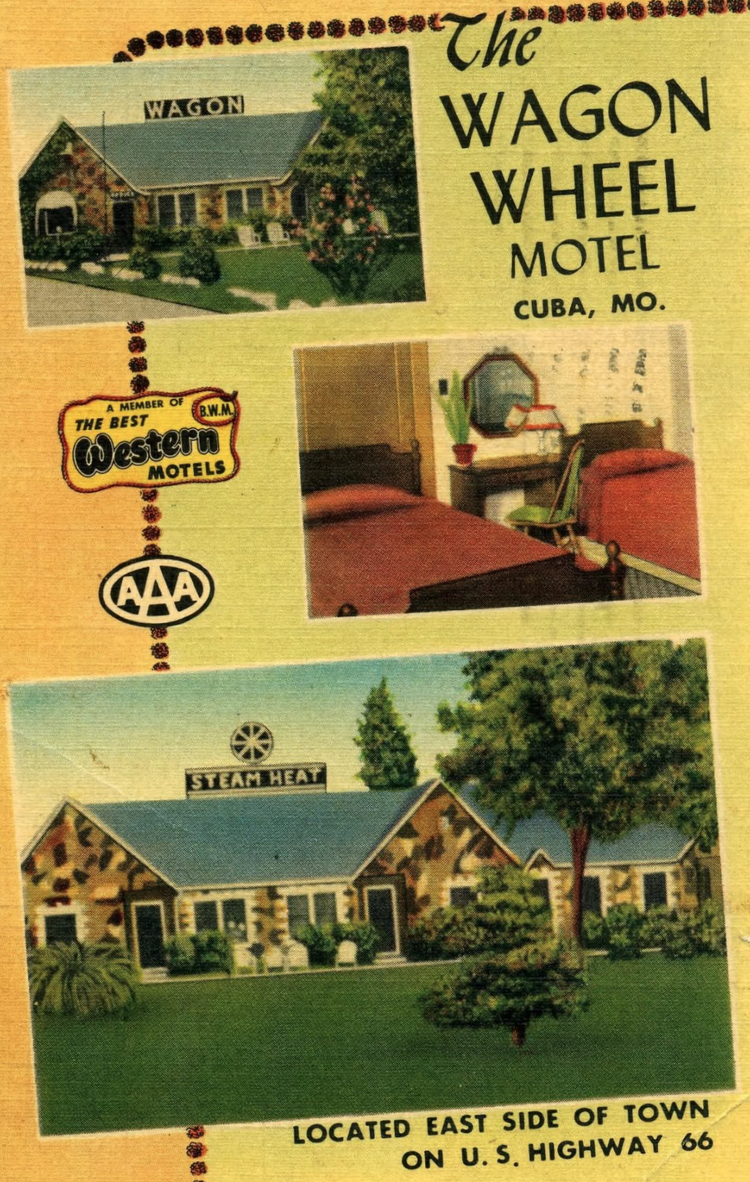
Local builder and stonemason Leo Friesenhan shaped the original buildings from regional Ozark sandstone in a Tudor Revival design. Steep roofs, front-facing gables, arched openings and decorative stonework gave the property a character unlike a standardized roadside chain.
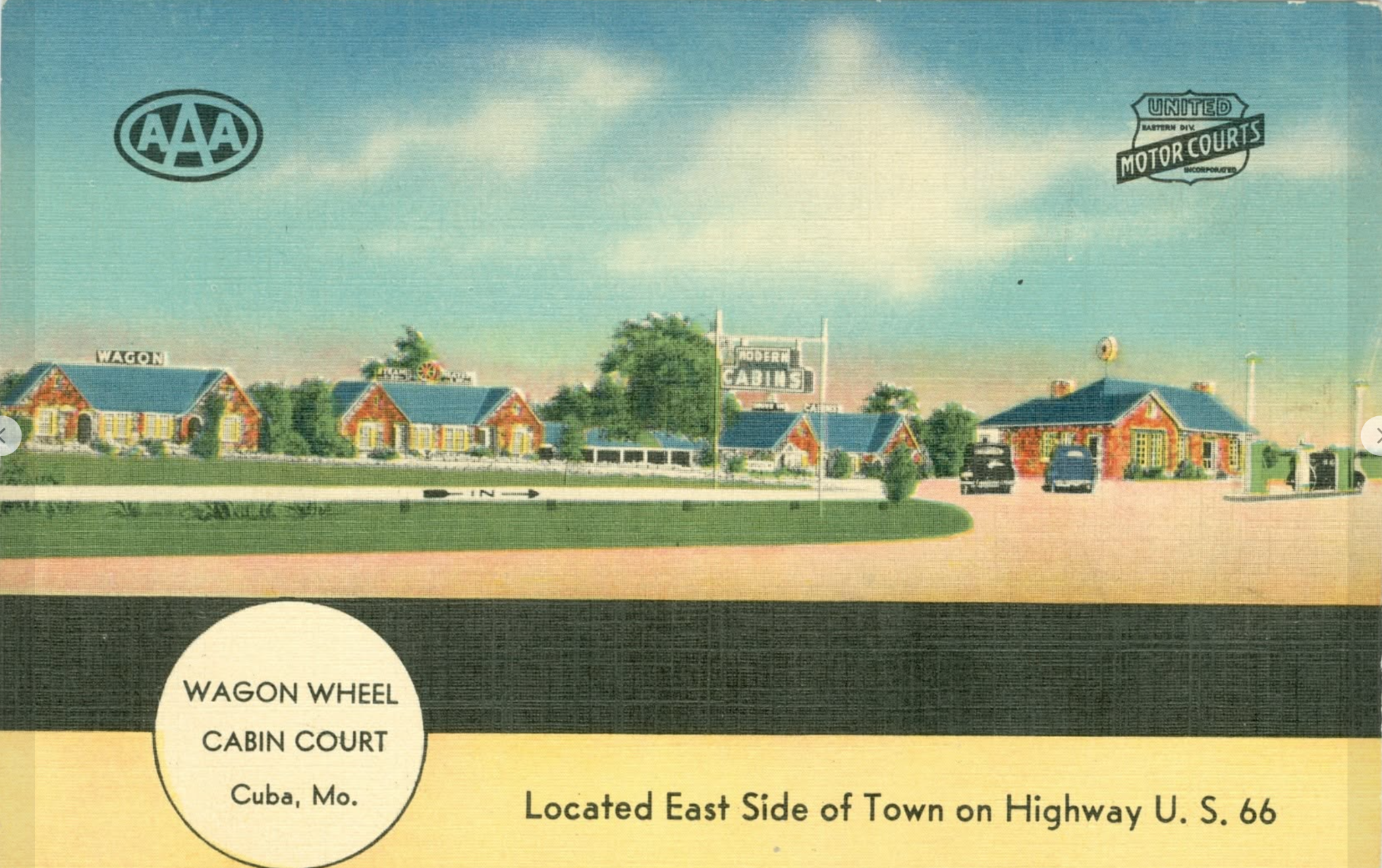
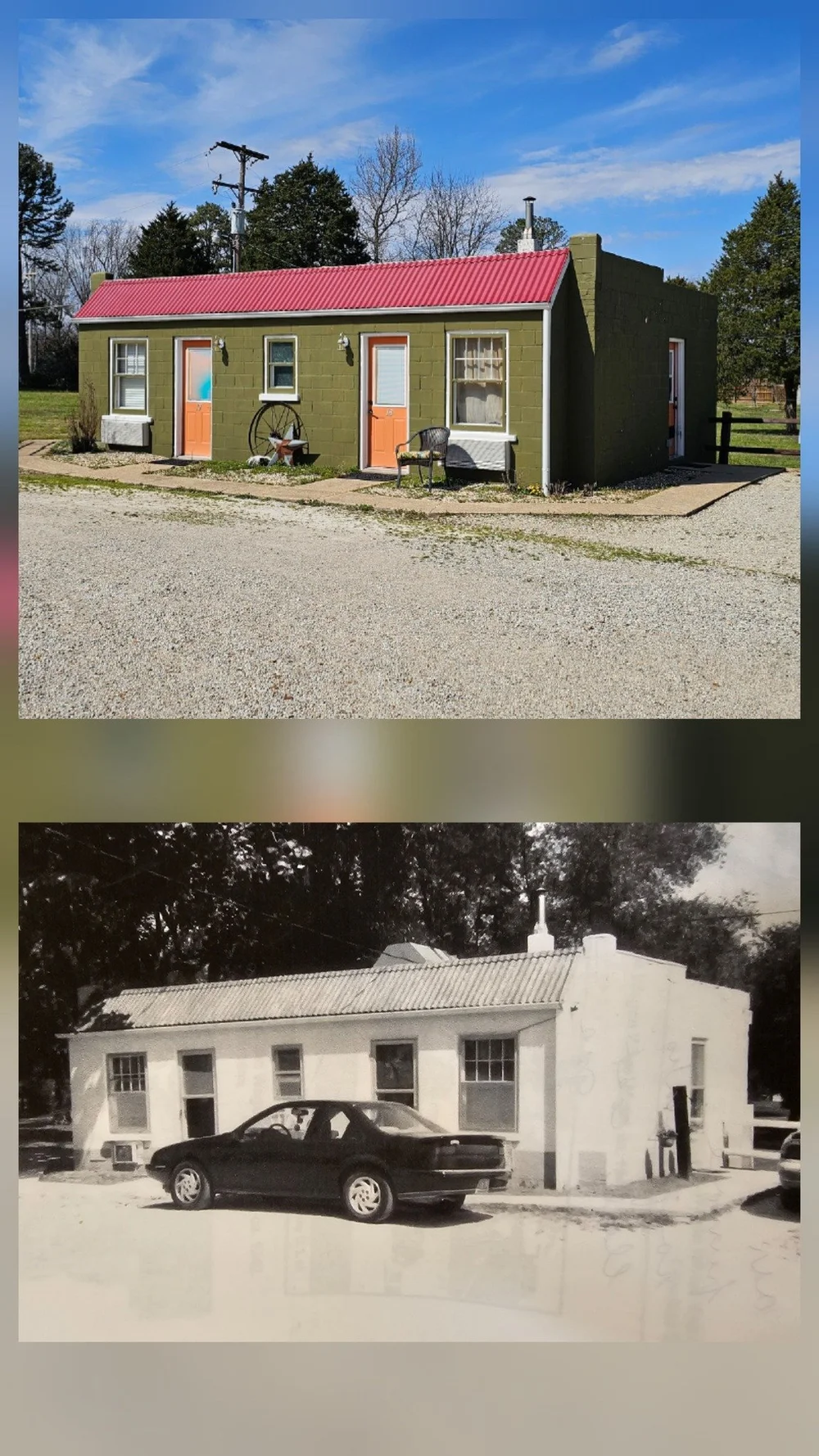
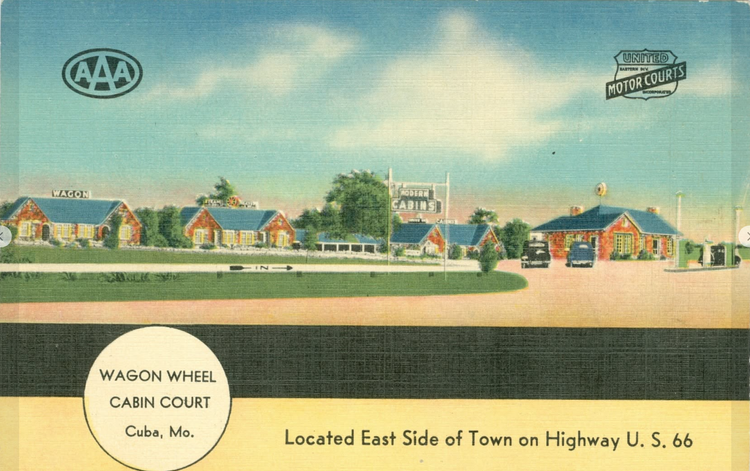
The original lodging was arranged in three stone buildings, each containing three guest units with attached garages. That multiple-unit plan anticipated the motel layouts that became common after World War II while preserving the intimacy of an early tourist court.
Life Along Route 66
From Wagon Wheel Cabins to Wagon Wheel Motel
In 1947, John and Winifred Mathis purchased the Wagon Wheel Cabins. The name shifted to Wagon Wheel Motel, additional service buildings were added and John Mathis designed the neon signage that became the property’s enduring roadside signature.
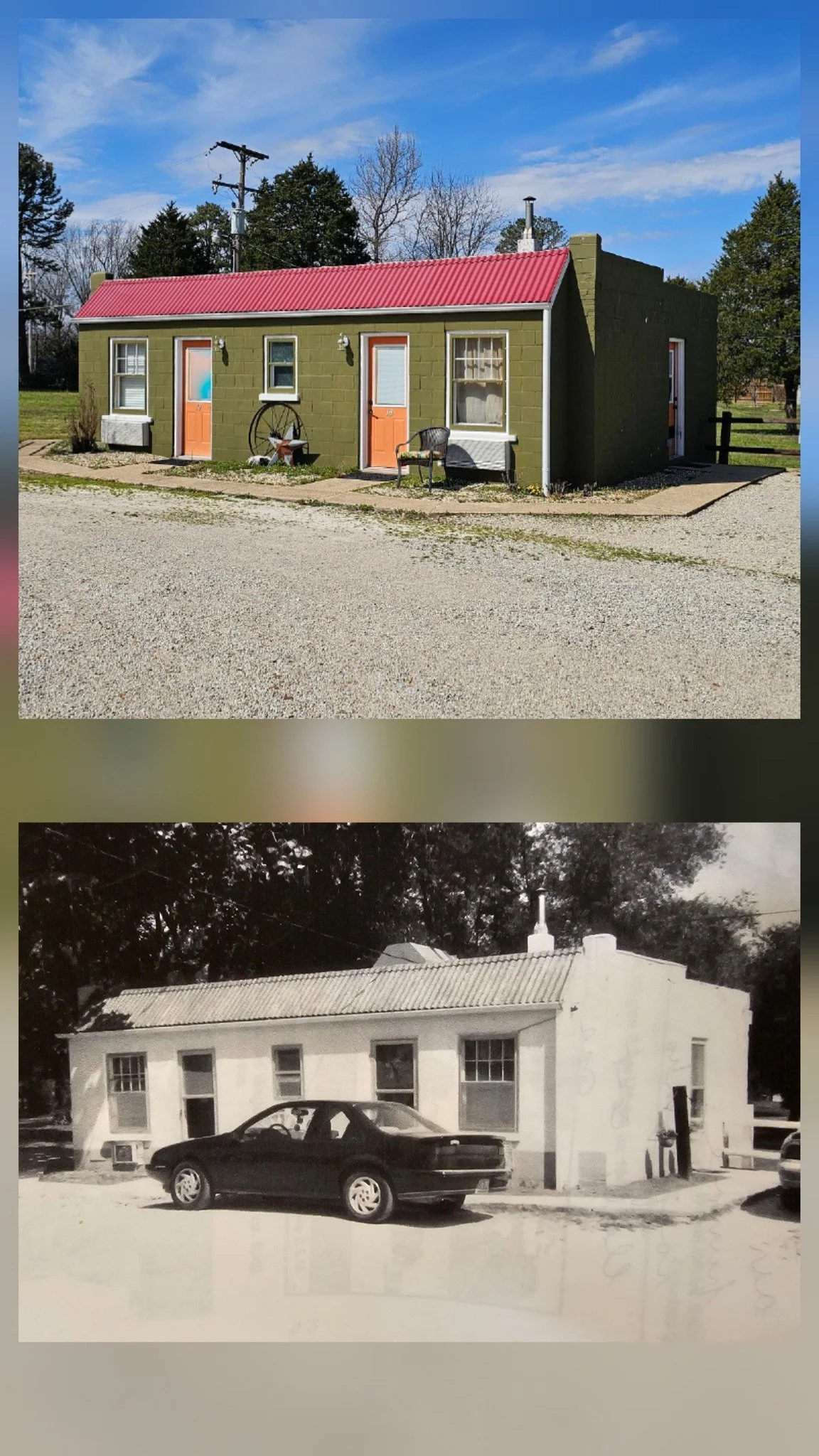
As automobile travel changed, garages were converted to additional lodging and the original café and station functions evolved. What did not change was the property’s role as a locally operated place for travelers to stop on Route 66.
Pauline Roberts, later Pauline Armstrong, became the motel’s longtime proprietor in 1963. Through the construction of Interstate 44, the decline of old-road traffic and the eventual decommissioning of Route 66, the Wagon Wheel continued welcoming overnight guests.
National Register Recognition
A remarkably intact Route 66 tourist court
On April 7, 2003, the property was listed in the National Register of Historic Places under the formal name Wagon Wheel Motel, Cafe and Station. The nomination recognizes a historic district significant for its role in Route 66 commerce and for its Tudor Revival and Ozark rock-masonry architecture.
The listing covers the historic complex at 901–905 East Washington Boulevard, including its motel, café-and-station history and associated contributing resources. It is a National Register property—not a National Historic Landmark.
Stewardship, 2009–2026
Connie Echols renewed the property without erasing its character
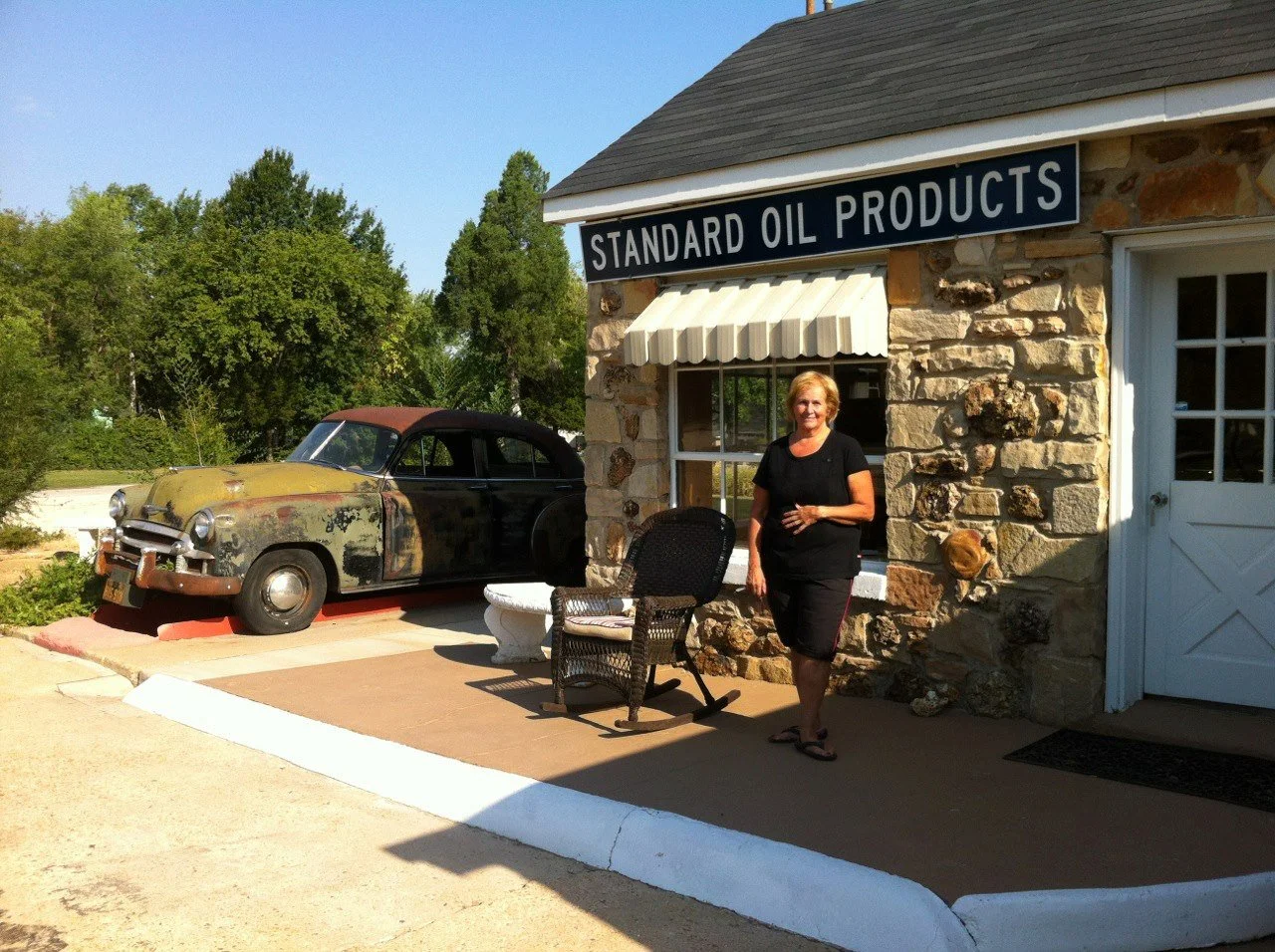
Connie Echols purchased the Wagon Wheel in 2009 and cared for it for nearly 17 years. She restored the former café as the motel office and Connie’s Shoppe, renewed guest rooms and building systems, and kept the historic motor court open to a new generation of Route 66 travelers.
Her work mattered because it joined preservation with continued use. The stone buildings, roadside identity and guest experience survived together—not as a static exhibit, but as an operating motel.
Documented preservation work
National Park Service cost-share records document a $30,000 project in 2010 supporting work on windows, floors, porches and HVAC, accompanied by an $86,925 partner match. A $17,500 project in 2011, also matched, supported roof replacement.
The Story Continues
Present-day stewardship
Rich and Christina Dinkela continue the Wagon Wheel’s preservation story through responsible maintenance, thoughtful improvements and hospitality rooted in the character of the historic property.
The purpose is continuity: honor the people who carried the Wagon Wheel this far, protect the architecture that makes it distinct and keep the motor court useful to the travelers writing its next chapter.
The Documentary Record
Postcards and preservation views
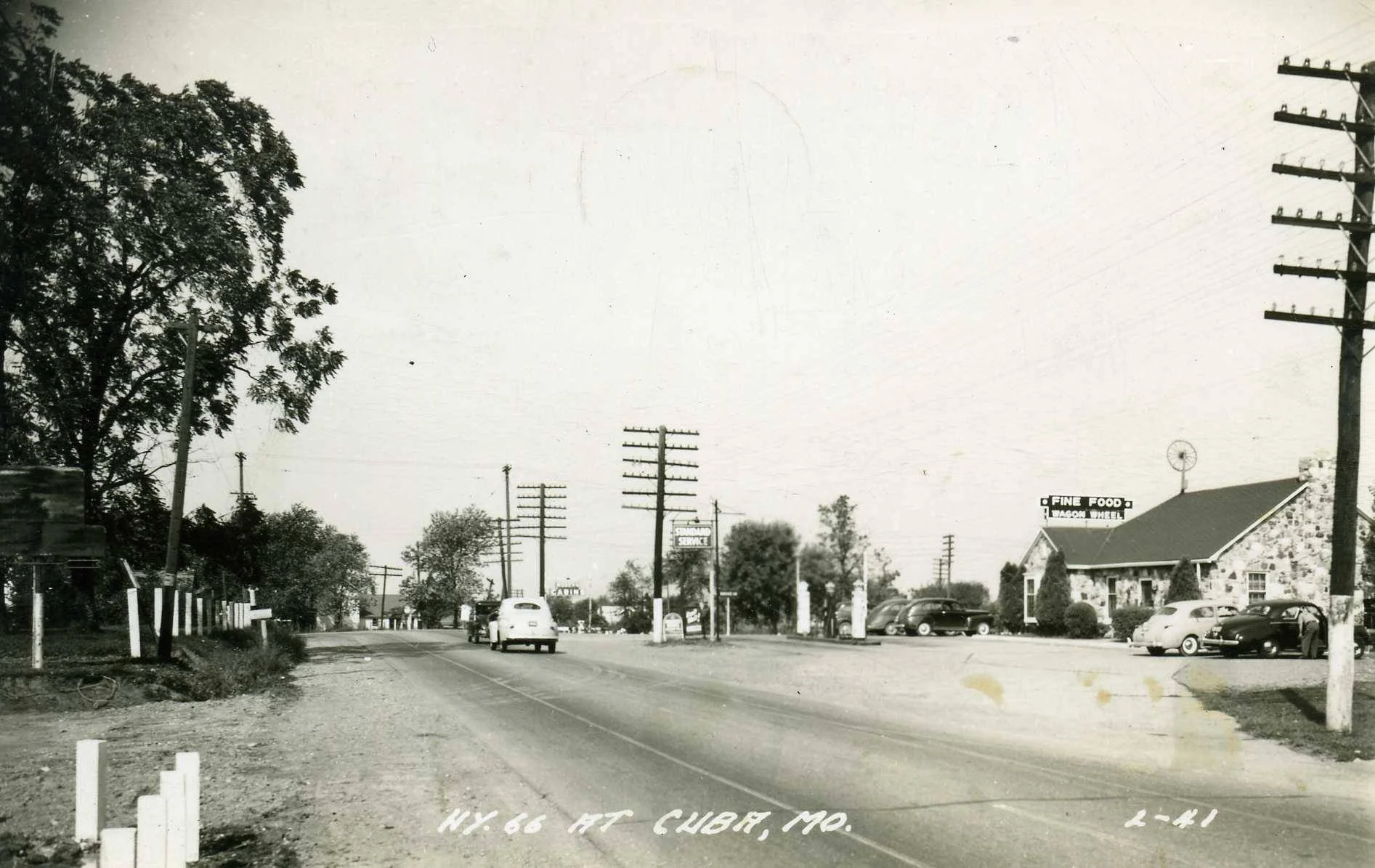
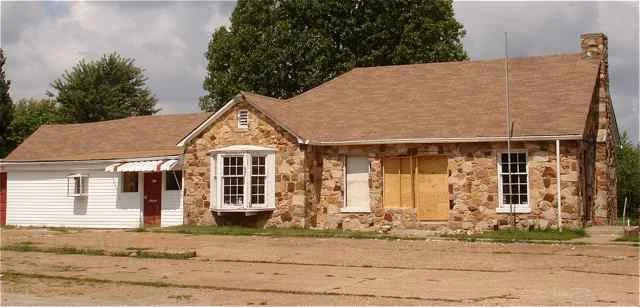
Historic postcards helped the Wagon Wheel advertise both modern comfort and a distinctly local place to stop. Later photographs record the condition of the property before its twenty-first-century renewal. These images are presented in their original proportions so signs, buildings and period details remain visible.
A Roadside Landmark After Dark
The neon still calls travelers in
The Wagon Wheel’s neon sign, designed by John Mathis around 1947, remains one of the property’s most recognizable Route 66 features. This short external video shows the sign illuminated beside the old highway.
History You Can Stay In
Why an overnight stay matters
The Wagon Wheel’s history continues because the property remains useful. A stay here supports the care of an authentic Route 66 motor court while giving travelers the uncommon experience of sleeping inside the story they came to see.
Choose a Room
Compare the historic property’s current room categories and features.
Plan Your Cuba Stop
Pair the motel with murals, local food and Ozark scenery.
Continue the Story
Learn more about today’s stewardship or get directions.
Stay at a Living Route 66 Landmark
Check current room availability and make the Wagon Wheel part of your own Route 66 story in Cuba, Missouri.